

Projects
Real engagements with verified numbers and systems that work.
Rinato’s project proof rests on two flagship engagements: World Vision’s Youth Innovation Project and Zambia’s SLIM programme. The work spans an international NGO, Zambian ministries and government institutions, the National Remote Sensing Centre, and RX AI, operational since 2025 with 2,719 FMNR sites under continuous monitoring.
World Vision Youth Innovation Project
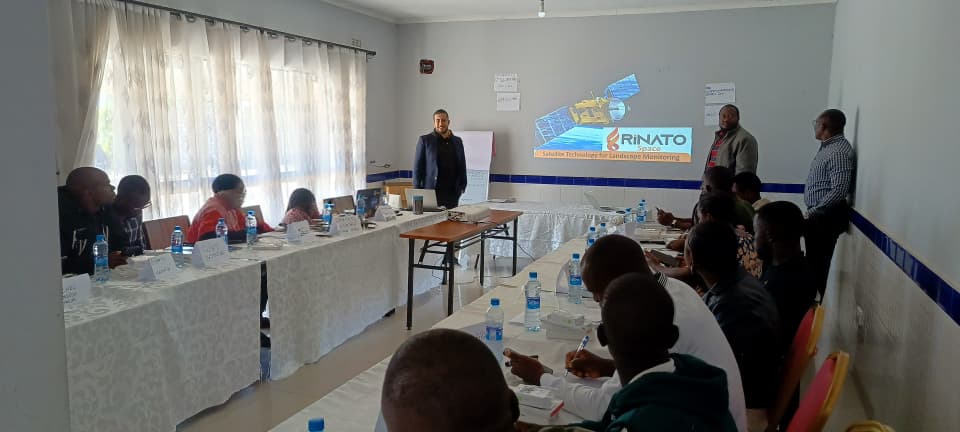
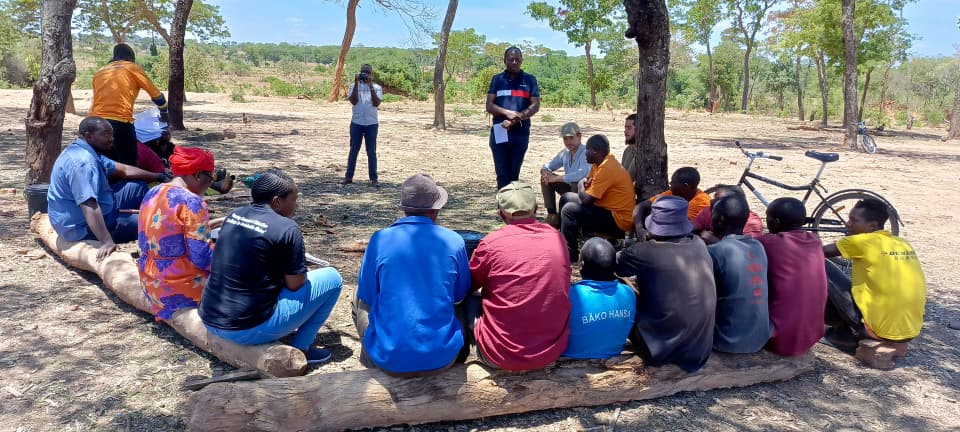
World Vision’s Farmer Managed Natural Regeneration programme in Zambia is the strongest public proof of how Rinato works. Demonstrated with World Vision Zambia across 2,719 sites and 32,560 hectares in three districts. Rinato mapped the programme footprint, trained youth teams, and brought the sites into continuous monitoring through RX AI. The work connects field mapping, satellite analysis, and reporting formats that programme teams can defend. It is not a study sitting on a shelf. It is a working monitoring system with sites live in the platform.
Programme scale
32,560 hectares mapped
2,719 FMNR restoration sites mapped, the same 32,560-hectare footprint expressed as sites. 150+ Zambian youth trained by Rinato.
Continuous monitoring
2,719 sites monitored in RX AI
All 2,719 sites are monitored continuously through RX AI, Rinato’s continuous monitoring platform, operational since 2025.
Capacity that stays
150+ Zambian youth trained
The youth teams learned to use satellite data to map farms, analyse landscapes, and report back to their communities. The mapping stays. The skill stays.
Delivery model
Field plus satellite plus RX AI
Field mapping, satellite analysis, RX AI monitoring, and World Vision-ready reporting formats were combined into one engagement.
SLIM programme
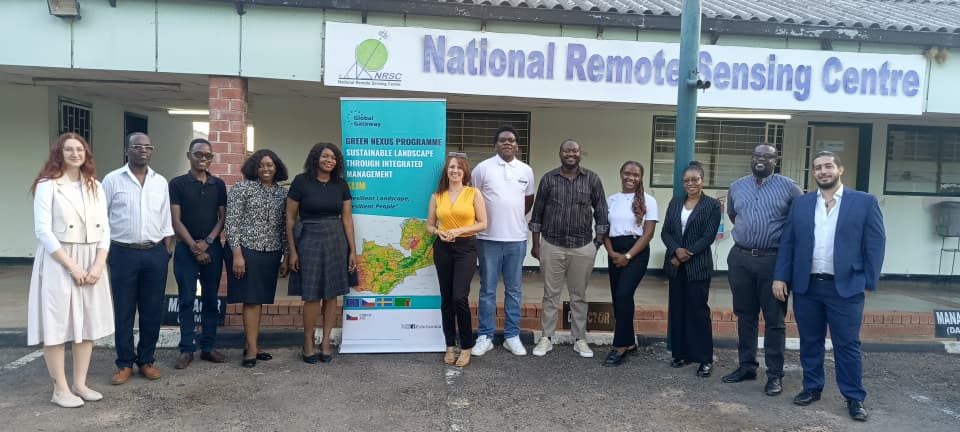
SLIM is funded by EU Global Gateway and the Czech Development Agency, in collaboration with People in Need and Zambia’s National Remote Sensing Centre. Under SLIM, Rinato works with 19 Zambian ministries and government institutions as stakeholders in products Rinato is producing, and as recipients of Rinato’s capacity building and training. Rinato’s role includes ministry engagement, capacity building inside NRSC, and drafting NRSC’s five-year strategic plan. This is institutional work at the level where national remote sensing capability is built.
Institutional footprint
19 Zambian ministries and government institutions
Under the SLIM programme, Rinato works with 19 Zambian ministries and government institutions as stakeholders in products Rinato is producing, and as recipients of Rinato’s capacity building and training.
NRSC 2026 to 2031
Five-year strategic plan drafted
Under SLIM, Rinato drafted the National Remote Sensing Centre’s five-year strategic plan, 2026 to 2031. The plan charts NRSC’s path from a remote sensing centre into a space science centre.
Institutional capacity
Training inside NRSC
Rinato runs capacity building inside NRSC: satellite analysis, ground operations, and the workflows that make a national remote sensing centre operate. The skill stays in-country.
Why this matters
Access built through delivery
Remote sensing work at national scale depends on trust, context, and local capability. The SLIM footprint gives Rinato a delivery position that cannot be copied from a slide deck.
Capacity Building
The project is not finished until people can use the system.
Capacity building cuts across both flagship engagements. Rinato trains youth teams, technical staff, and government institutions so satellite intelligence becomes an operating habit, not an external report.
World Vision Youth Innovation Project
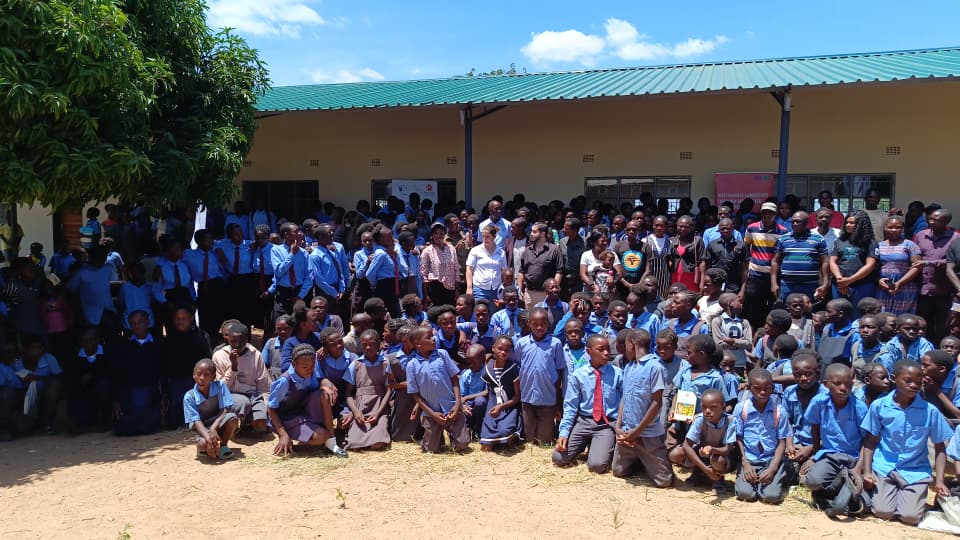
150+ Zambian youth trained
They mapped 32,560 hectares, learned to use satellite data to map farms and analyse landscapes, and now report back to their communities.
National Remote Sensing Centre
NRSC staff training
Inside Zambia’s National Remote Sensing Centre under SLIM: satellite analysis, ground operations, and workflow integration.
SLIM programme
Ministry engagement
Under the SLIM programme, Rinato works with 19 Zambian ministries and government institutions as stakeholders in products Rinato is producing, and as recipients of Rinato’s capacity building and training.
Where This Is Going
These projects sit inside a longer Zambian space arc.
The World Vision and SLIM engagements are not isolated project entries. They are chapters in the same arc described on the About page: the 2021 Ignitos consortium, the NRSC strategic plan, capacity building inside national institutions, RX AI as the platform underneath, and the Space Lab as the further chapter being shaped.
Each project closes a practical gap the next chapter needs. The mapping proves field delivery. RX AI proves continuous monitoring at site level. SLIM deepens national institutional capability. Together, they point toward a Zambian-led satellite intelligence layer that can serve programmes across Africa.
Media and Publications
Public stories, interviews, and external features
Selected public-facing features that reflect Rinato’s work and wider programme contributions.
World Vision
Youth innovation project story
A public story on youth-led innovation, restoration monitoring, and the use of technology to address deforestation and climate challenges.
COMESA Business Council
Satellite technology for Africa’s digital future
An interview and public discussion connecting satellite technology, sustainability, and practical institutional use across Africa.
People in Need
Partnership feature
A partner publication covering collaboration, programme delivery, and institutional work connected to Rinato Space.
Work With Rinato
Bring a project with real field responsibility.
Rinato is best suited to programmes where monitoring, training, evidence, and reporting have to work together. Choose the path that matches your role.
Donor or multilateral
Use Rinato when programme evidence needs to be traceable from site data to reporting.
Government or ministry
Use Rinato when national monitoring needs local capability, training, and operational workflows.
Agribusiness or enterprise
Use Rinato when distributed sites, outgrower networks, or landscapes need clearer monitoring.
Research partner
Bring us the question, dataset, or field context. We will look for a collaboration that can move into operational use.